Who is Steering the Ship?!?

Let's start right out weird.
Do you think about hitting the bathroom light switch in the morning or does it just magically seem to come on when you walk in the room?
How often have you picked up your phone for some reason and suddenly you're looking at some app like Facebook or Twitter before you even recall the reason you picked up the phone? Like in line at the grocery store. I caught myself on that last one recently. Before I even had a conscious thought, my phone was in my hand, Facebook was open, and I was sighing waiting for the line to move without even really looking at the people around me.
These are examples of heuristics our brains adopt through experience and repetition. Heuristics evolved to save us but may be working against us.
I first learned the word heuristics through playing Magic: The Gathering. In that game, players are often presented with dozens of lines (choices) for each turn. The fatigue of calculating the potential outcome of each option can be debilitating. You might be familiar with the phrase, 'he was thinking three moves ahead' but great chess players (typically) only actively think about moves in unfamiliar situations. The best players in the world have memorized the opening lines of countless variations and famous matches and can play them without taxing their conscious minds because, at this point, they've built heuristics to carry that cognitive load. The openings and mid-games can fly by until the brain encounters something new and calls for the pilot to take over the wheel.
I first learned the word heuristics through playing Magic: The Gathering. In that game, players are often presented with dozens of lines (choices) for each turn. The fatigue of calculating the potential outcome of each option can be debilitating. You might be familiar with the phrase, 'he was thinking three moves ahead' but great chess players (typically) only actively think about moves in unfamiliar situations. The best players in the world have memorized the opening lines of countless variations and famous matches and can play them without taxing their conscious minds because, at this point, they've built heuristics to carry that cognitive load. The openings and mid-games can fly by until the brain encounters something new and calls for the pilot to take over the wheel.
In a tournament game of Magic, like chess, there is a clock ticking down on how long the match can last. A player can lose the game if they spend their time considering each and every move for too long. Essentially, they lost the war by being too focused on individual battles. By eliminating the active cognition needed to resolve situations we previously resolved sufficiently, the brain conserves energy and bandwidth for novel situations it hasn't encountered before. I stress sufficiently here because our brains, in their evolved wisdom, know that, often, a quick sufficient answer will save our lives faster than a long deliberated better answer. And, if they're doing their jobs -and if we don't actively work to identify how they're serving us- we may never even notice them.
I went looking for a textbook definition and instead found this easily digestible explanation on Investopedia, Heuristics are "...mental shortcut[s] commonly used to simplify problems and avoid cognitive overload. Heuristics are part of how the human brain evolved and is wired, allowing individuals to quickly reach reasonable conclusions or solutions to complex problems. These solutions may not be optimal but are often sufficient given limited timeframes and calculative capacity."
Now let me muddy it up again with my understanding! I think of heuristics as the brain's defense against decision fatigue and inefficiency, and most express themselves in the mind's ability to take actions without including our conscious minds. And thank goodness for that because if we had to think about every action throughout the day we'd certainly die.
Tiger! Run!
Which way?!
DOESN'T MATTER!
(Maybe?)
But, I don't notice them, am I giving up my agency to them? Are my heuristics really serving me? Have I fallen asleep and let the autopilot take me off course? Every time I find myself opening the fridge out of boredom was that a conscious choice? How about when I turn on the television as soon as I walk into my living room? It has become so normalized for me to pick up my phone every time I experience a nanosecond of boredom.
So, are they saviors or saboteurs, these mental shortcuts that have grown within us to navigate the complexity of daily decision-making? They can serve as our autopilot, liberating our conscious minds to focus on the unfamiliar and the creative. Or, they can also lead us astray, into unhealthy routines and habits that might not serve our greater aspirations. The key, like in so many growth pursuits, lies in awareness. That is to say, recognizing when our heuristics are working for us and whether or not they are aligned with our intentions. As we become more mindful of them, we regain our agency. Applying awareness in this instance gives us the power to decide when to allow our instincts to take over and when to grab the wheel.
So, the next time you reach for your phone without a thought or find yourself in front of the fridge for no reason, I hope you remember this post and take a moment to reflect.
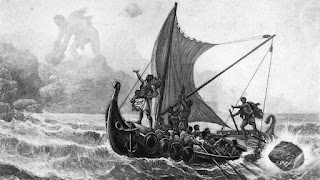
Are you on autopilot, or are you steering the ship?

Comments
Post a Comment